

Florida E-Bike Laws: What Parents Should Know
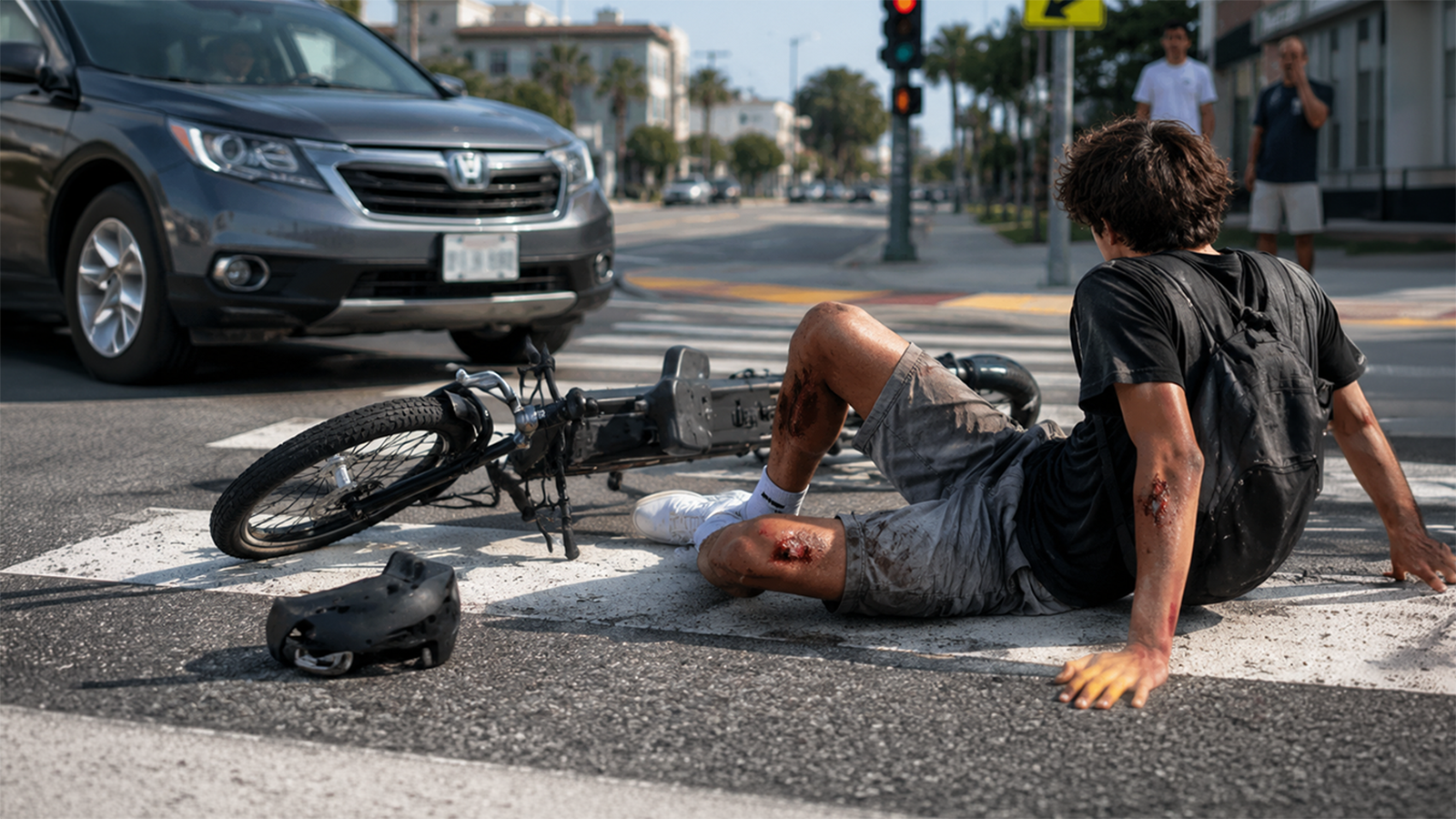
Summer changes the rhythm of family life. Kids are out of school. Parents are working. Camps, friends, summer jobs, beach days, and neighborhood plans all start competing for time.
For many families, an e-bike can feel like a practical solution. It gives a child or teenager more independence without requiring a parent to drive everywhere. That makes sense. Many parents are trying to balance work, transportation, safety, and their child’s growing need for freedom.
But e-bikes are not toys. They can move quickly, they are often used near pedestrians, and many young riders do not fully understand the traffic rules that apply to them. What starts as a short summer ride can become a serious legal, medical, or financial issue if a child is injured, hits a pedestrian, violates traffic laws, or rides a device that is faster or more powerful than parents realized.
The short answer is this: Florida law treats electric bicycles like bicycles in many important ways, but e-bike riders still have legal duties. New Florida e-bike rules set to take effect on July 1, 2026 add more specific pedestrian-safety requirements, including yielding to pedestrians, giving an audible warning before passing on certain shared paths, and staying under 10 mph when a pedestrian is within 50 feet in certain sidewalk or pedestrian-use areas. Parents should understand what their child is riding, where the child is riding, and what legal consequences can follow after an accident.
Governing Legal Standard
UnderFlorida Statutes § 316.20655, an electric bicycle and its operator are generally afforded the rights and privileges, and are subject to the duties, of a bicycle or bicycle operator. The statute also states that an electric bicycle is a vehicle to the same extent as a bicycle, subject to specific statutory exceptions and local regulatory authority.
UnderFlorida Statutes § 316.2065, bicycle operators have safety-related duties involving roadway operation, passengers, lighting, brakes, sidewalk operation, yielding to pedestrians, and audible warnings before passing pedestrians on sidewalks or crosswalks. The statute also requires bicycle riders or passengers under age 16 to wear properly fitted and securely fastened helmets that meet federal safety standards.
Florida’s comparative fault statute,Florida Statutes § 768.81, may affect how responsibility is allocated in negligence cases involving riders, drivers, pedestrians, parents, property owners, product manufacturers, or other responsible parties. In a negligence action, contributory fault chargeable to the claimant may reduce the amount awarded, and the court enters judgment based on each liable party’s percentage of fault.
Why Summer Increases E-Bike Risk for Florida Families
During the school year, children and teenagers often have more structure. There are school hours, bus schedules, sports practices, and parent routines.
Summer can be different. A teenager may use an e-bike to get to a friend’s house, a part-time job, a summer camp, the beach, a shopping plaza, or a park. Younger riders may use them around neighborhoods, sidewalks, trails, or community paths. Parents may not be available to drive every time, and many families want to give older kids some independence.
That is normal. But the legal risk increases when independence grows faster than judgment, training, or supervision.
Parents should also understand that not every device sold online as an “e-bike” is automatically legal, safe, or appropriate for a minor. Florida law requires electric bicycle manufacturers and distributors to apply a permanent label showing the classification number, top assisted speed, and motor wattage of the e-bike. Florida law also prohibits tampering with or modifying an e-bike to change its motor-powered speed capability or engagement unless the required label is replaced after modification.
That matters because some devices marketed as e-bikes may have speed or power capabilities that make them function more like mopeds, motorcycles, or off-road electric motorcycles. This distinction can affect where the device may be used, what traffic rules apply, whether insurance coverage exists, and whether law enforcement views the incident as a traffic violation, civil matter, or something more serious.
For Florida parents, the safer approach is to verify the device class, top assisted speed, throttle function, manufacturer instructions, age suitability, and local riding restrictions before letting a child use it as summer transportation.
What Florida’s New E-Bike Rules Change in 2026
Florida lawmakers have moved to add more specific safety rules for e-bike operation near pedestrians. Effective July 1, 2026,CS/SB 382 adds subsection (10) to Florida Statutes § 316.20655. Under that language, a person operating an e-bike on a shared pathway that is not adjacent to a roadway, including a shared pathway in a park or recreational area, must yield to pedestrians and give an audible signal before overtaking and passing a pedestrian.
The same legislation states that a person operating an e-bike on a sidewalk or other area designated for pedestrian use may not operate the e-bike faster than 10 miles per hour if a pedestrian is within 50 feet. A violation is a noncriminal traffic infraction punishable as a nonmoving violation under chapter 318.
The legislation also creates a Micromobility Device Safety Task Force connected to the Florida Department of Highway Safety and Motor Vehicles. The task force is directed to examine and recommend improvements to the regulatory framework for micromobility devices in order to encourage safe operation and reduce traffic incidents, injuries, and fatalities.
Florida’s updated e-bike rules reflect a growing reality: e-bikes, scooters, and other micromobility devices are now part of daily transportation in Tampa Bay and across Florida. As use increases, the law is beginning to address the safety concerns that come with more riders sharing roads, sidewalks, parks, and pathways.
What E-Bike Injury Data Shows
The injury data is one reason this topic deserves serious attention.
The U.S. Consumer Product Safety Commission reported that CPSC staff was aware of 310 e-bike-related fatalities from 2017 through 2024. The same report estimated 698,500 emergency department visits involving all micromobility products during that period. The report identified motor vehicle accidents and control issues as top hazards associated with e-bike fatalities.View the CPSC micromobility report.
The CPSC also reported that collisions with moving or parked motor vehicles were the leading cause of death associated with e-bikes, accounting for 170 reported deaths. Control issues, including crashes into fixed objects or road curbs, accounted for 61 e-bike fatalities. Pedestrian-related incidents were also identified among the reported fatality patterns.
Those are national data points, not a prediction about any one Florida community. But they show a trend that matters for families across Tampa, Hillsborough, Pinellas, and Pasco County, and throughout Florida: e-bike accidents can cause serious injuries, and children are not immune from those risks.
What Can Happen After a Florida E-Bike Accident?
After an e-bike accident, families may face several legal issues at once.
If a child is injured, the family may need to determine whether a driver, property owner, another rider, defective product, unsafe path condition, or another factor contributed to the crash.
If a pedestrian is injured by a child or teenager on an e-bike, the investigation may focus on speed, supervision, device type, right-of-way, visibility, warnings, and whether the rider followed applicable rules.
If a driver hits an e-bike rider, the case may involve driver negligence, comparative fault, roadway conditions, witness statements, video footage, medical records, and insurance coverage.
If a minor rider causes serious injury, the legal questions can become more complicated. Florida does not automatically make parents legally responsible for every negligent act of a child. But depending on the facts, disputes may arise over supervision, entrustment, knowledge of prior unsafe conduct, insurance coverage, or whether the device was appropriate for the child.
Parents should avoid two extremes. The first is panic. Not every e-bike accident means a parent will be sued, charged, or found responsible. The second is assuming there is no risk. That is also unsafe.
Florida Statutes § 316.2065 states that no parent or guardian of a minor may authorize or knowingly permit the minor to violate the bicycle regulations in that section. That does not mean every parent is automatically liable after an accident, but it does reinforce why parent knowledge, permission, safety rules, and supervision can become relevant after a serious crash.
The better takeaway is not fear. It is preparation.
How Parents Can Reduce Risk Before and After an E-Bike Crash
Before allowing a child or teenager to use an e-bike regularly, parents should take time to review both the device and the rules.
Start with the basics. Confirm the e-bike class, top speed, throttle capability, braking condition, lights, tires, and manufacturer warnings. Make sure the child understands that sidewalks and shared paths are not free-for-all spaces. Pedestrians must be protected.
Set clear family rules for speed, helmets, passengers, phones, nighttime riding, intersections, parking lots, road crossings, parks, beach areas, and riding with friends. A teenager may be physically capable of operating an e-bike but still lack the judgment to anticipate traffic, pedestrians, sudden turns, cars backing out, or younger children on sidewalks.
Parents should also review local rules. Cities, counties, parks, schools, HOAs, and community spaces may have additional restrictions.
Finally, parents should check insurance coverage. A serious e-bike crash may raise questions under auto insurance, homeowners insurance, umbrella coverage, health insurance, or no applicable coverage at all. Those questions are much easier to evaluate before an accident than after one.
After an e-bike crash, safety comes first. Get medical care if anyone may be injured, even if the injury seems minor at first. Call law enforcement when appropriate, especially if there is an injury, a vehicle involved, a pedestrian struck, property damage, or a dispute about what happened.
Document the scene if it is safe to do so. Take photos of the e-bike, vehicle, sidewalk, roadway, lighting, signage, helmet, injuries, and surrounding area. Avoid guessing about fault at the scene. Avoid posting details online. Avoid giving recorded statements to insurance companies before understanding your rights.
If a child is involved, preserve the device and do not repair, discard, alter, or modify it before speaking with counsel. The device itself may become important evidence.
Frequently Asked Questions About Florida E-Bike Laws
-
Yes. Under Florida Statutes § 316.20655, electric bicycles and e-bike operators generally have the rights and duties of bicycles and bicycle operators. That means riders may have legal responsibilities related to roadway use, sidewalks, lighting, passengers, yielding, and safe operation. Local rules may also apply depending on where the e-bike is used.
-
Effective July 1, 2026, Florida’s e-bike law adds pedestrian-safety requirements. Riders on certain shared pathways must yield to pedestrians and give an audible signal before passing. Riders on sidewalks or pedestrian-designated areas may not exceed 10 mph when a pedestrian is within 50 feet. Violations are noncriminal traffic infractions punishable as nonmoving violations.
-
Possibly, depending on the facts. Florida does not automatically make parents liable for every negligent act of a child. However, legal disputes may involve supervision, unsafe entrustment, prior knowledge of risky behavior, insurance coverage, device modification, or whether the e-bike was appropriate for the child. Serious injury cases should be reviewed individually.
-
Get medical attention first. Then document the scene, preserve the e-bike, keep the helmet and purchase records, gather witness information, and request any police or incident report. Avoid repairing or discarding the device too quickly. An attorney can help evaluate whether a driver, property condition, product issue, or another party may be responsible.
-
They can be. An e-bike accident may involve personal injury law if someone is hurt because of negligence, unsafe driving, defective equipment, poor property maintenance, reckless riding, or another preventable hazard. Florida comparative fault rules may affect how responsibility is divided among riders, drivers, pedestrians, parents, property owners, or other parties.
Why the Right Firm Matters
E-bike accidents can create overlapping legal issues. A single crash may involve personal injury, traffic rules, insurance coverage, parental responsibility, product questions, medical documentation, and conflicting accounts of what happened.
Device information, photos, video footage, witness names, medical records, insurance communications, and law enforcement reports can all matter.
At Busciglio Sheridan & Schoeb,Marie Schoeb brings experience in personal injury, auto accidents, traffic defense, criminal defense, and civil litigation to cases where an accident may raise injury, insurance, liability, or enforcement questions. Whether the issue involves an injured child, a pedestrian accident, a driver collision, or questions about liability after a serious e-bike crash, the goal is to understand the facts clearly and protect the client’s next steps.
If you or your family are dealing with an e-bike accident, pedestrian injury, traffic-related incident, or insurance dispute in Tampa, Hillsborough County, Pinellas County, or Pasco County, contactBusciglio Sheridan & Schoeb at (813) 225 2695 or reach out through the firm’sonline contact form.
About the Author
Marie Schoeb is a Florida Bar licensed attorney practicing in Hillsborough County, Pinellas County, and Pasco County. She is licensed to practice in all Florida State Courts and the United States District Court for the Middle District of Florida. Her practice includes personal injury, auto accidents, traffic defense, criminal defense, and civil litigation matters involving injury claims and liability disputes.